
KSRanked Part 1
The bottom nine

Finally, there will be an official record of my opinion of all the published works of Kim Stanley Robinson (excluding short stories and essays that have not been published as collections). This edition will cover the nine worst books by one of my favorite authors. Tomorrow I will publish a list for the middle ten, and the day after a final ranking for the ten best books by Stanley. Stay tuned until the end of the week for what I learned since my Love Letter, a Tier List, and KSR Recommendation Guide. I am getting it all out of my system and then will try to put the Stan stan behavior on hold for a while. Enjoy!
I will add a “Moments of Being1” section at the end of each entry. This is my attempt to entice readers with some interesting things that happen in each book, and my way of highlighting the focus on recreation and activates that make life exciting that I find unique to Stanley’s writing which I first discussed in a post in February.
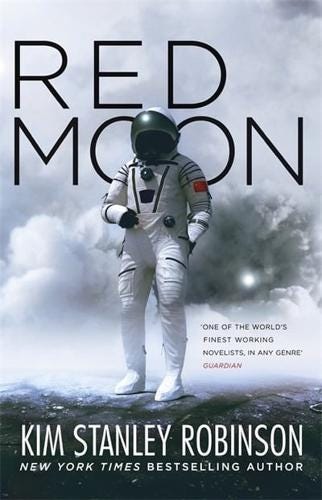
29: Red Moon (2018)
Science Fiction, Speculative Fiction, Political Intrigue
If I had to pick one Stanley book I think simply fails, it would be Red Moon. There are parts of this book I like, but on a whole I think it is his weakest book and the entry I had the least fun reading. Plot wise it is an international political intrigue story about tensions between the United States and an ascendant China now that both have partially colonized the moon, and when I started it I optimistically described it as Stanley doing his version of a Michael Crichton. Unfortunately, I think it had some of Stanley’s worst habits as well as aspects of Crichton that annoy me. Stanley speculating on multipolar geopolitics, government surveillance technology, AI, and near future space projects are all worthy topics but it did not come together for me. The main character as the token American who must be led by the nose through Chinese culture and the events of the book by more interesting and competent people was especially frustrating. I would not recommend this book. There are so many better KSR words to read.
Moments of Being: Lunar ballet, rock climbing, an incredible geo-eclipse2
28: Vinland the Dream and Other Stories (2002)
Short Story Collection
This is one of the three KSR short story collections on my list. I actually love most of the stories in this collection and strongly recommend them in theory. Unfortunately for Vinland, all of these stories overlap with the other short story collections which simply have more and additional even better stories.
Recommended Stories:
Mercurial
Coming Back to Dixieland
Black Air (Received World Fantasy Award for Best Novella, Science Fiction Chronicle Readers Poll-novella in 1984. Runner up for Locus Best novelette)
Vinland the Dream (Received Science Fiction Chronicle Readers Poll Short Fiction in 1992)
The Disguise
Muir on Shasta
Moments of Being: scuba diving, lots of hiking, sunrise on Mercury, musical performance, 16th century naval battle, amateur filmmaking, sword fighting, and way more!
28: Remaking History (1991)
Short Story Collection
Similar to the last, Remaking History is not as complete or rich as the Best of KSR collection although it does beat out Vinland.
Recommended Stories (beyond what was in Vinland):
Zürich
The Part of Us That Loves
Moments of Being: deep cleaning your apartment to retain a deposit, musical performance, and young love.
28: Planet on the Table (1986)
Short Story Collection
The best of the non-”Best of” collections in my opinion because the introduction by Stanley was a story in itself that starts by playfully discussing the contents of the book and how it should be read with the reader before descending into a mini fever dream. Good fun!
Moments of Being: The same as all the other short story collections? I don’t know what you want from me.3
27: Escape from Kathmandu (1989)
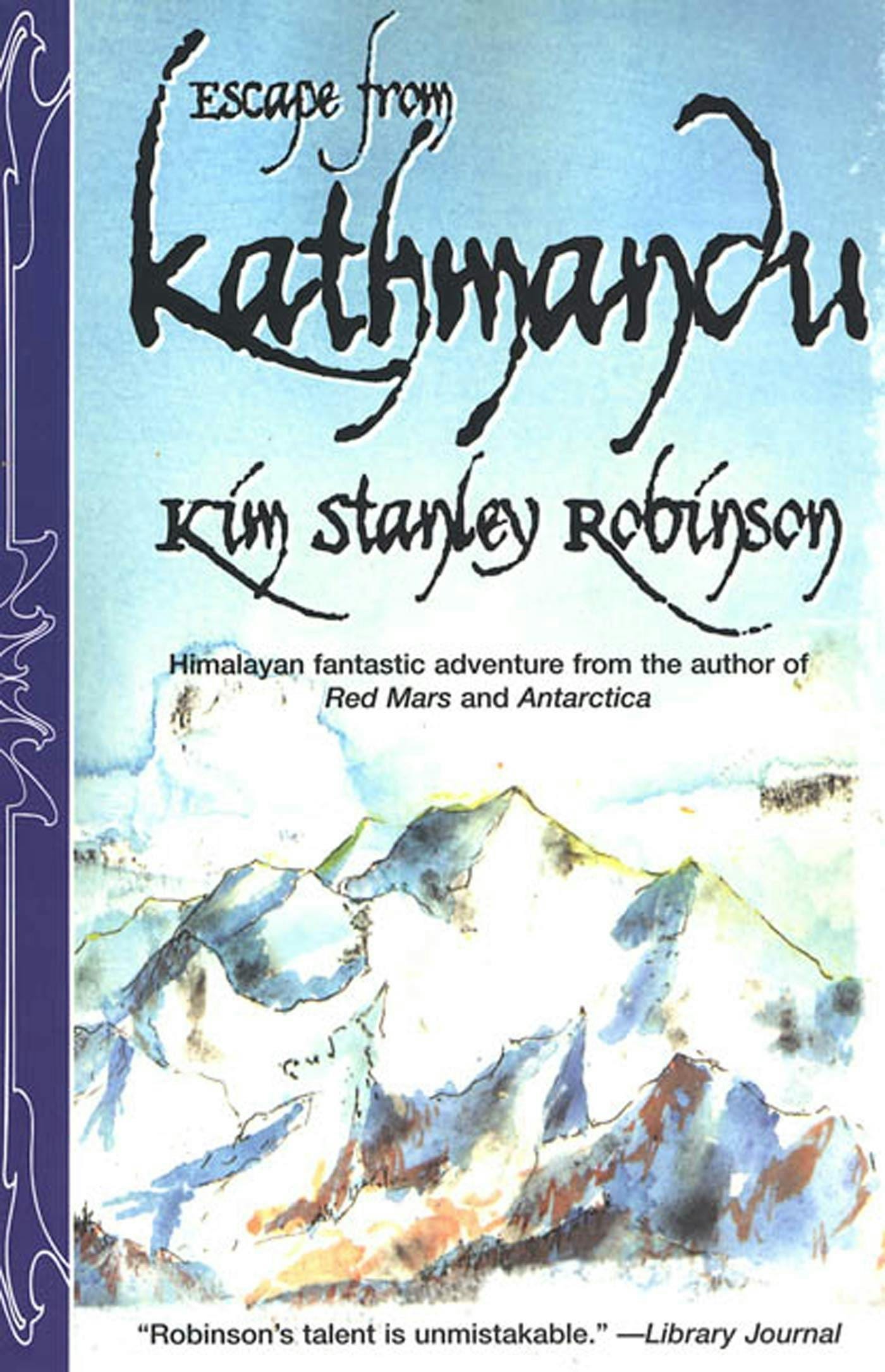
Adventure, Fantasy, Travel, Humor
This book is structured as 4 almost novella length episodes where two American hikers go on adventures in and around Nepal. They get pulled into increasingly complicated scenarios involving local politics, religion, and culture and then try to make the best of it. It’s a fun time and you can feel Stanley’s personal experience hiking in the area, and the start of the many Buddhist themes in his work. With this book, I recommend it but simply place it lower than the rest on the list. I think the humor (which there was a lot of) was mostly hit but did occasionally miss for me, which may be part of my ranking.
Moments of Being: accidentally summiting Everest, befriending a Yeti, food poisoning, bribing politicians, and minor international incidents.
26: Antarctica (1997)
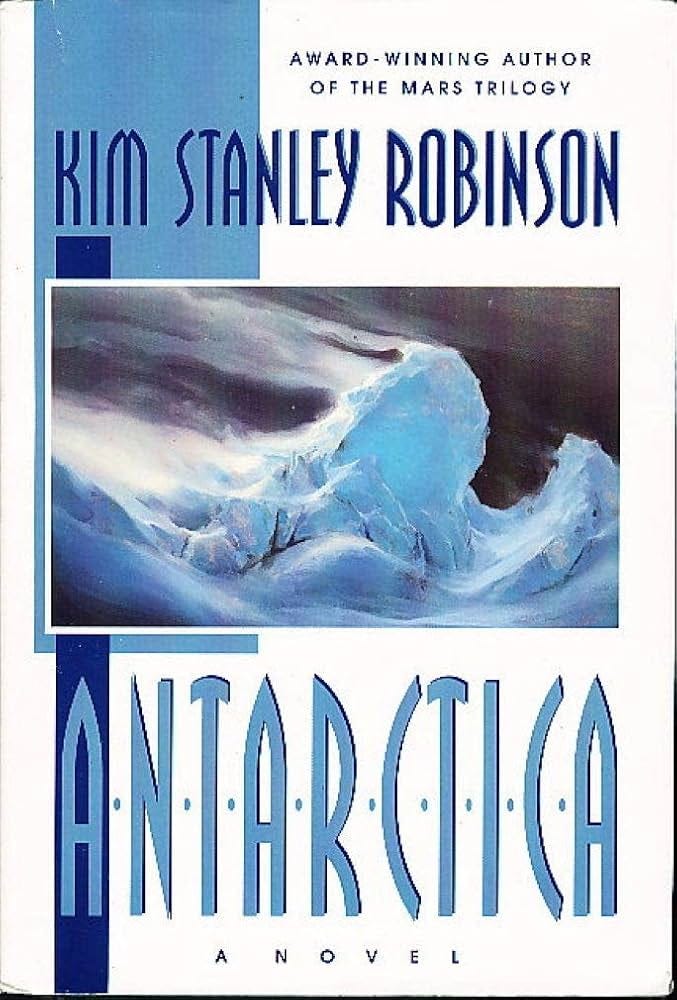
Science Fiction, Speculative Fiction, Environmental, Adventure
Awards: Nominated for a Locus in 1998 as best Sci-Fi Novel, placed second4
Only as I write this now did I discover that Antarctica was published the year after Stanley’s final book in the Mars Trilogy. My reaction when I first read this book was that it felt like a first draft for Mars, and was not worth the time when you could simply read those so learning that it came after is a bit of a narrative flip for me. Unfortunately, I stand by Antarctica feeling like an inferior version without the characters and scope it’s predecessor.
On it’s own merits, Antarctica is a bold book about climate change, international and scientific cooperation, radicalization, and the most extreme conditions on our planet. There is eco-terrorism, survival stories, and a lot of great science all strengthened by Stanley’s own trip to Antarctica on a National Science Foundation Antarctic Artists and Writers Program grant in 1995.5 He is a great writer of the natural world and climate as always and this book shines out in the cold.
What is there is good and worth a read, but it is hard to rank any higher.
Moments of Being: Ice cave water slides, polar treks, and science station life.
25: Forty Signs of Rain (2004)
Science Fiction, Speculative Fiction, Environmental
This is the first of the Science in the Capital trilogy that was later combined into Green Earth as a reduced story with updated science. I have to shamefully confess that I have not read this original version as Stanley recommends reading Green Earth. My placement is based on that version and the role it played in the larger omnibus novel.
Forty Signs is the weakest of it’s trilogy and a fairly rough start, but ends up creating strong foundations for things to come. It is a book concerned with the lives and efforts of individual scientists and bureaucrats in the face of the massive global climate crisis. Considering the KSR reader is very likely to be an environmentally minded individual who feels overwhelmed and pessimistic about global trends, this is interesting. We are given a view into how decisions are made on the level of individual grant proposals, career planning, and professional conversations and a scenario where these small moments can become part of much larger change. All of that is great and classic KSR. My issues with the book were in a slower pacing, unfortunate feelings that the politics central to the book was no longer relevant in the age of Trump, and the main character who annoyed me. All three of those complaints get better as the book goes and are reversed by the end of the trilogy.
Moments of Being: extreme weather events, questionable repelling into government buildings, stuck elevator meet cutes (very sweaty), child care, email jobs, and professional burnout.
24: Ministry for the Future (2020)
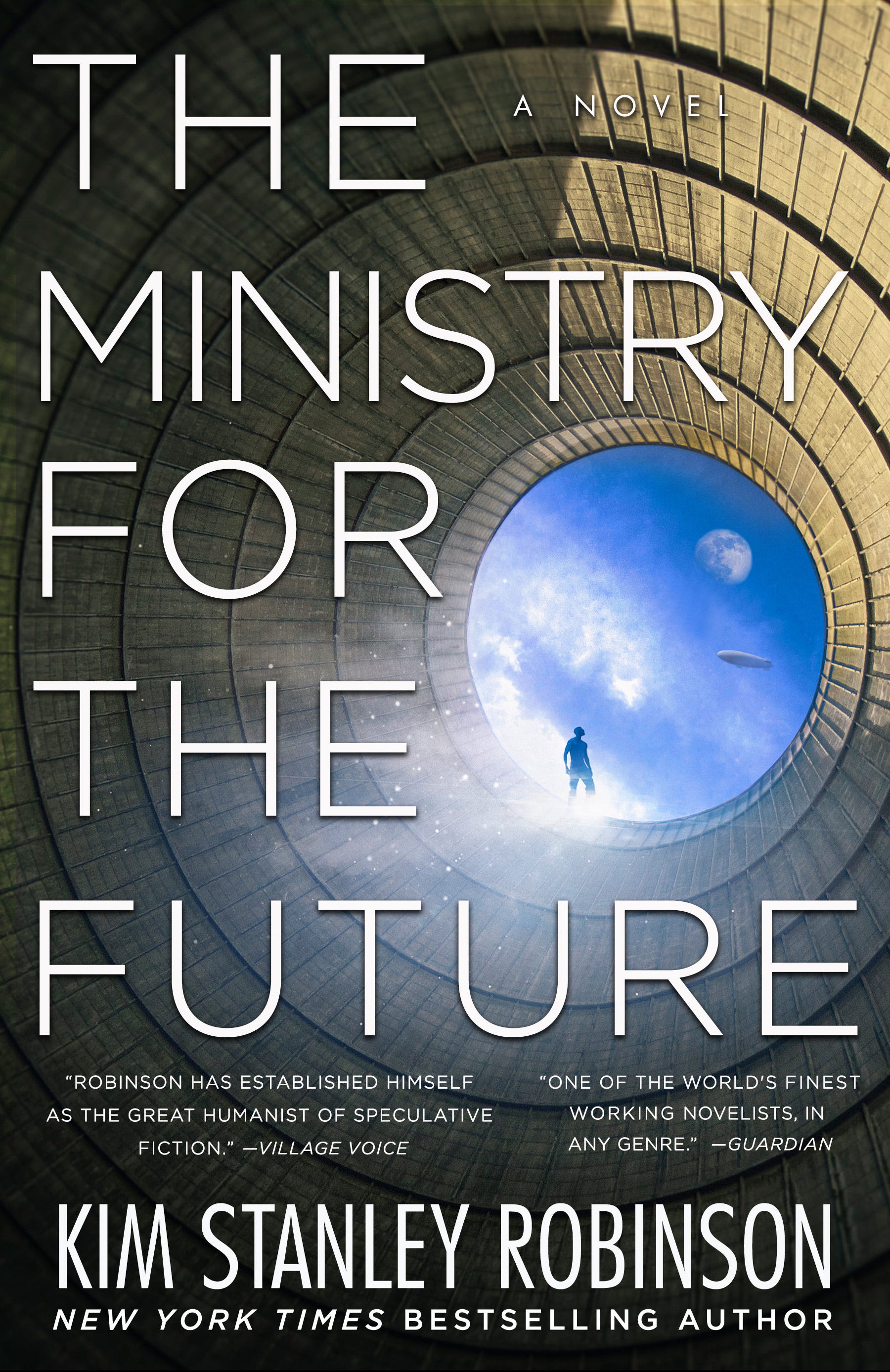
Science Fiction, Speculative Fiction, Environmental, Utopian
Awards: won Kurd Lassawitz Preis (Germany) best foreign novel 2022, won Grand Prix de l’Imaginaire (France) best foreign novel.
For a while I used to say this was my least favorite Stanley book. That is not true. I am just being petty because it is his book that gets the most attention outside of science fiction circles (by people such as Bill Gates and Obama, outlets like Bloomberg, Nature, and many more ) and overshadows his other work. I am compromising with the merit of the book and my own issues to place it here on my list. Ministry is an interesting read and continuing to prove itself as an effective motivator for change! Since 2020, Stanley has kept a blistering pace for appearing at climate conferences, doing interviews, and writing op-eds (he spoke at 38 events across 12 days in COP26 as an example), Oxford created the Oxford Ministry for the Future, and the book is regularly cited by political organizations, governments, and activists. Real change is coming from Ministry.
The book itself is told in 106 short chapters that jump around the world to different characters, locations, and challenges constantly. I think about the start of the book daily, which has a truly horrific depiction of a deadly heatwave in India, when studying for my current environmental degree. There is a central cast to act as a throughline in the eponymous Ministry for the Future (an organization created by the UN to advocate for the people and natural world that will suffer in the future from our actions today), but the book is more importantly about a decentralized global environmental movement. The science is extensive, but presented in a digestible and interesting way. All of these experimental and varied pieces add up to a very hopeful and shockingly possible possible-future. The constant changing of style does make the book feel occasionally disjointed and some parts more interesting than others, but that is also the point.
Moments of Being: Hiking, eco-terrorism, kayaking the flooded streets of LA, and general “what if we actually tried to do good things?” energy throughout.
23: Gold Coast (1988)
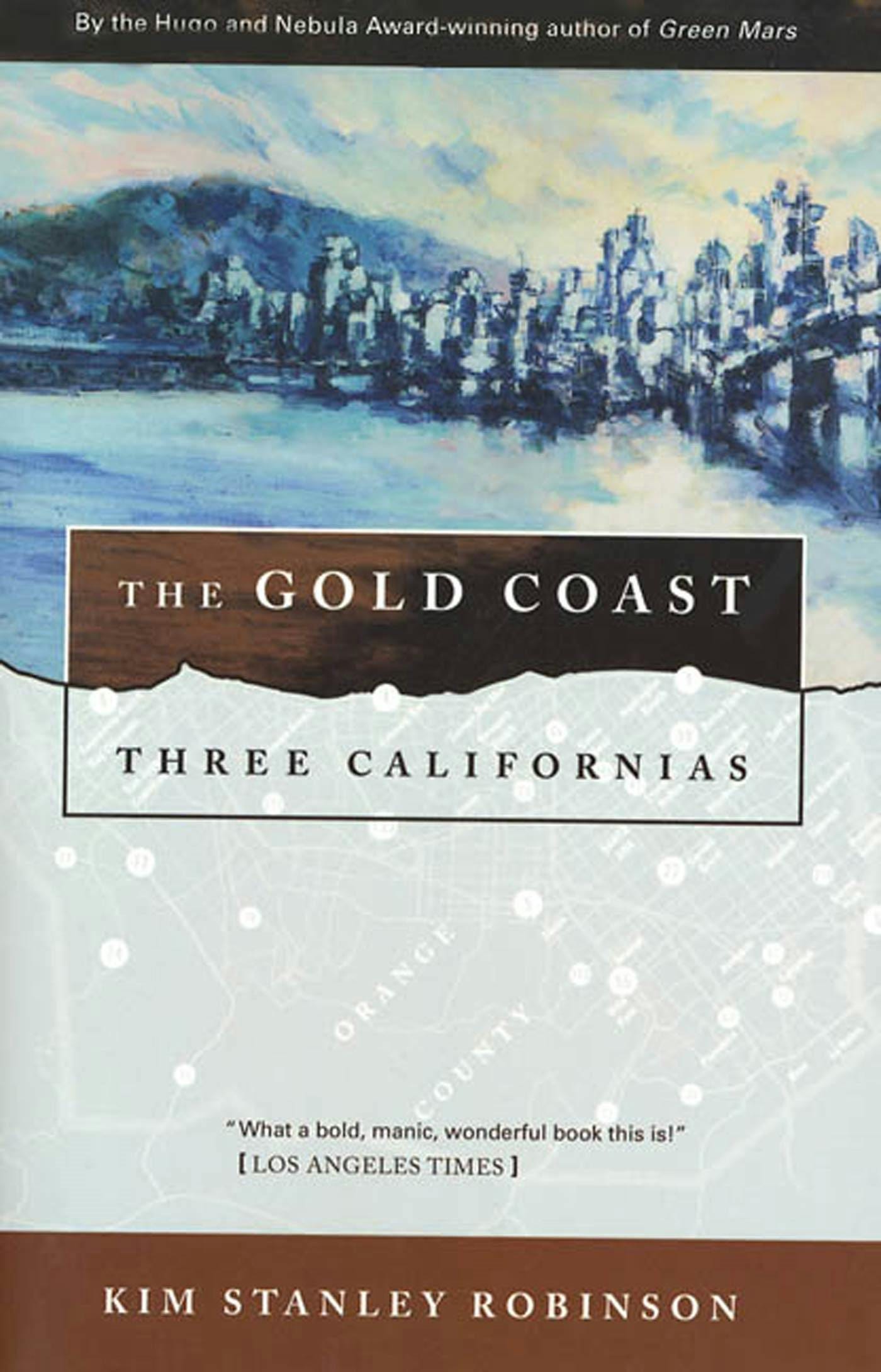
Alternate History, Science Fiction, Speculative Fiction, Dystopia
Awards: Second place for John W. Campbell award in 1989
I confess that my memory of this book is a bit foggy. In my defense, I am about to start rereading it now after 5 years from my first look. I will add any updated thoughts to my normal monthly recap in a few weeks.
Gold Coast is the second in the Three Californias triptych. The three books are meant to be different paths California could take. Aspects from the three books are shared, with character, themes, and names that appear in all three. Gold Coast is the “if this continues” future that Stanley saw from the 1980’s. It shows an Orange County made into an Autopia, instead of Stanley’s traditional utopian view, where concrete megastructures, automated cars, and corporations dominate. Eventually the main character is radicalized and joins efforts to sabotage the defense contractor his father works for and looks for a way out of the systems designed to generate money and unhappiness. I remember thinking this one was interesting, but the weakest of the California books. I saw that Stanley described this as his most autobiographical novel, but was unable to find the interview or context for that claim.
Moment’s of Being: cars, drugs, sex, and rebellion.
22: The Martians (1999)
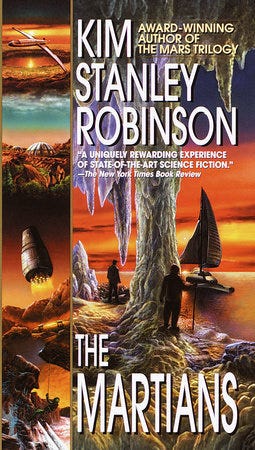
Science Fiction, Speculative Fiction, Environmental, Utopian, Short Story Collection
Welcome to Mars! This is a collection of stories, poems, articles, and essays set within the world of Stanley’s Mars Trilogy or alternate paths the series could have taken. As a collection of so many varied elements it has some ups and downs, but provides the most desperate Mars readers with just a little bit more time in the world before you need to resort to a reread. The biggest strength of The Martians in my mind is seeing the transformed world from as many perspectives as possible which creates a richness for the sense of place even when I return to the main books.
Moments of Being: Hiking, swimming, boating, baseball, and sunsets on the red planet.
21: 2312 (2012)
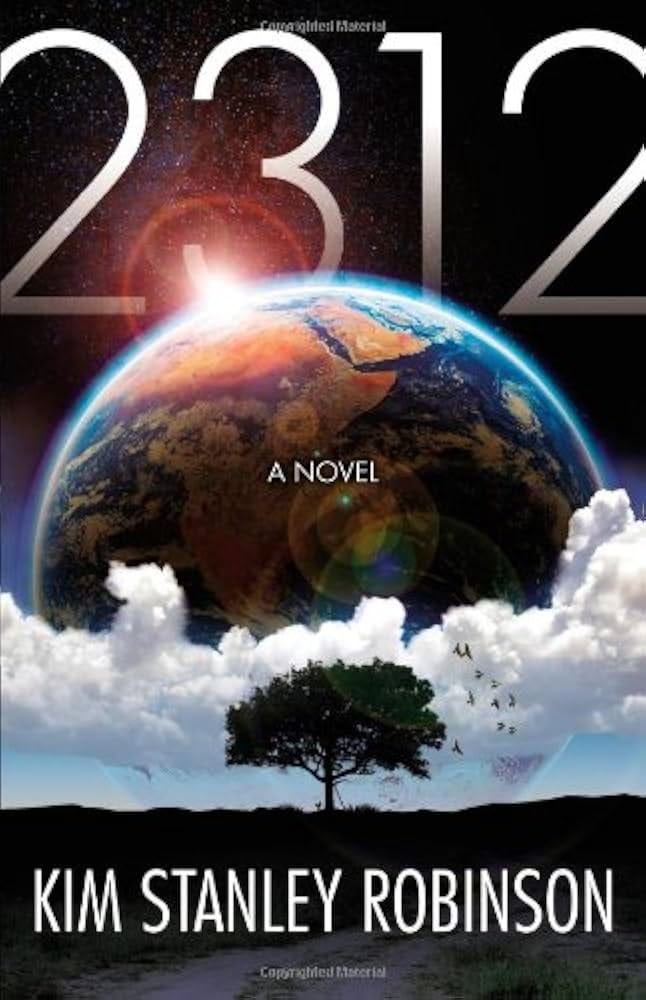
Science Fiction, Speculative Fiction, Environmental, Utopian
Awards: Won 2013 Nebula, Second place for Locus awards Best Science fiction novel, and finalist for John W. Campbell award.
Set near the far end of Stanley’s consistent-ish timeline, 2312 looks at what life may be like as humanity steps into our own as masters of the solar system with the power to freely shape our bodies and the planets around us. One of his earliest books first coined “the Accelerando” as the period in human history when people will spread out among the solar system in a disorganized and ever increasing way. 2312 is that. The main character of the book is Swan, someone who is famous system wide for designing incredible custom asteroid habitats (think terraforming a specific asteroid based off the wishes of a specific group so that conditions can support wildly different lifestyles) who gets swept up in a major inter-planetary political crisis. Swan also suffers from major difficulties with self identity. The technology of the day allows body modification to be easy and commonplace, and Swan feels lost in the wake of decisions that past versions of herself have made to their body.
I have sections in this book that I love and others that went on too long or lost my interest. I am curious to see how I feel about it if I reread in the future. The relationship between the two main characters especially was extremely well done and I love Swan. I also appreciate the feeling of 2312 as a “Utopia in progress” as so many of Stanley’s books are. The characters go to NYC and see how much has changed and how much there is to do since NY 2140, get pulled into Martian politics which have started to seemingly fracture or at least complicate the progress made in the Mars Trilogy, and visit truly wondrous places all over the system where there is progress still to be made.
Moments of Being: trekking for days in darkness beneath Mercury, animals returning to a terraformed earth, and surfing a solar flare.
What’s Next?
That brings us to the end of the worst nine Stanley books with only one I don’t recommend. Hopefully I have convinced you that the top twenty must be worth your time! I will be back tomorrow with even better books to try and sell you on. Feel free to ask questions or leave comments. I like talking about all of these.
The term comes from High Sierra: a Love Story, when Stanley shared transcendent memories of nature and life.
My favorite moment in Red Moon is when an eclipse happens in the POV from someone on the moon as Earth passes in front of the sun. Within the shadow of the Earth, you can see twinkling light from cities that look like stars. Gorgeous!
Down and Out in the Year 2000 is yet another short story collection that I did not bother to buy or make an entry for because it has nothing that wasn’t in the other collections. Just get the Best of and Remaking History for the full spread.
I went on a bit of a rabbit hole on the awards he has received in writing this. Here is the best page I found on it.
I have seen reports that the copies of the Mars Trilogy at McMurdo Station are read often and well loved!